
The day your implant treatment is finally completed can feel like a major turning point. You’re smiling more easily, eating more comfortably, and enjoying the confidence that comes with dental implants for teeth in Towson.
As life settles back into routine, though, many patients wonder how to protect something that’s become so important and feels so much like their natural teeth. At the Krupp Center, we meet patients every day who want to do what’s right, but aren’t always sure where to start.
Implant hygiene doesn’t need to be intimidating or overly technical. It requires consistency, understanding, and guidance from professionals who care about the long-term success of your treatment.
In this blog, our team walks you through expert-backed hygiene tips for dental implants.
Table of Contents
- Why Dental Implant Hygiene Matters
- Daily At-Home Care for Implants
- Habits and Risk Factors That Can Shorten Implant Lifespan
Why Dental Implant Hygiene Matters
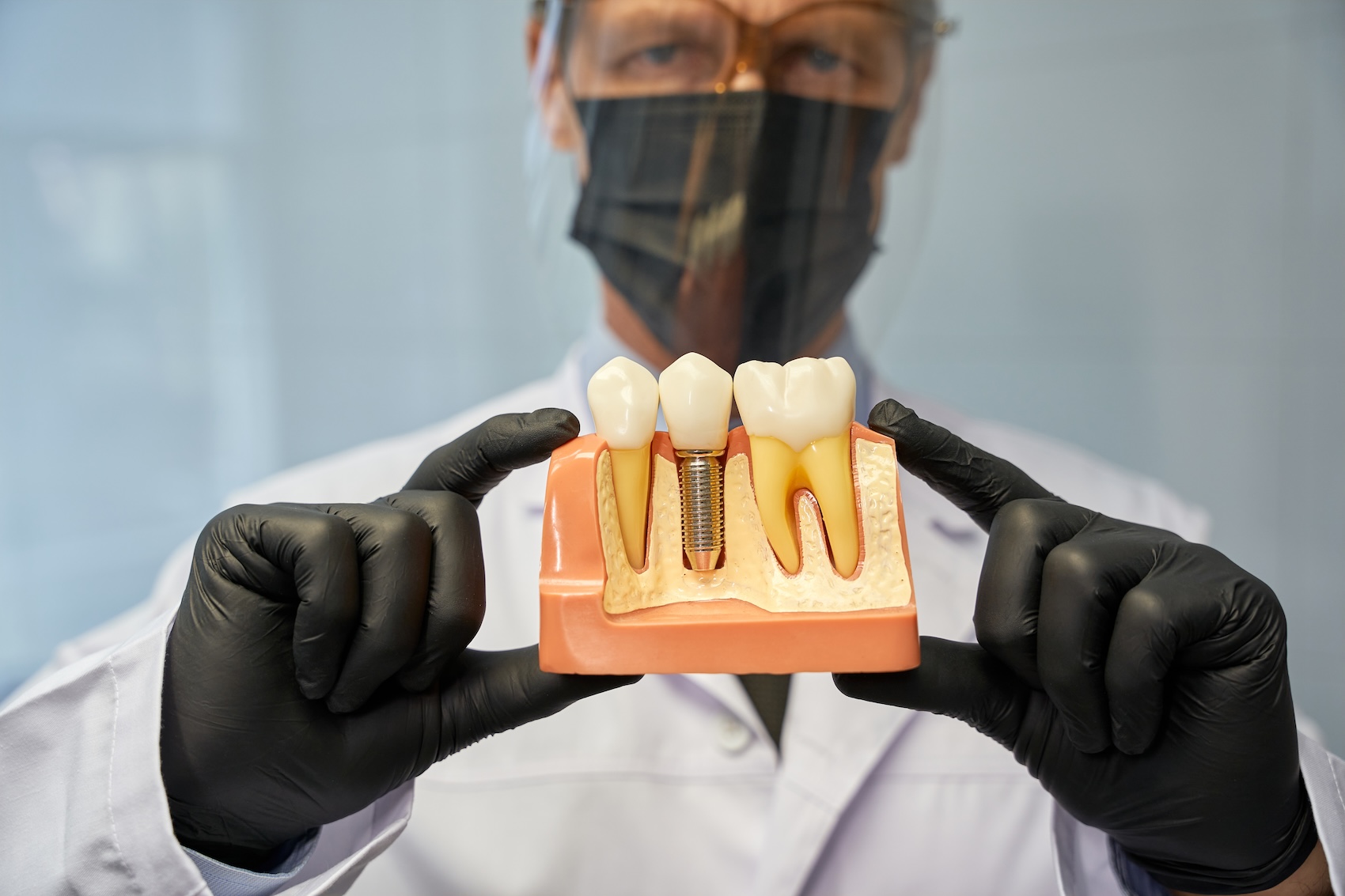
Dental implants are an advanced, reliable solution for replacing missing teeth, but they are not self-maintaining. While implants are securely anchored into the jawbone using titanium posts, they do not contain living tissue the way natural tooth roots do.
Our natural teeth have a blood supply that helps fight infection and adapts to slight changes over time. Implants, on the other hand, rely entirely on the health of the surrounding bone and tissues.
Because an implant itself is non-biological, it cannot respond to inflammation or infection without professional intervention.
Without proper care, dental implants can be more prone to bacterial buildup around the gumline. This leads to inflammation of the gums and can even damage the supporting bone.
Preventing Peri-Implant Disease
Just like our natural teeth, when you get dental implants for teeth in Towson, they can become susceptible to plaque buildup and bacteria. If plaque is not removed consistently, it can harden into tartar and irritate the surrounding tissues. This can lead to 2 conditions: peri-implant mucositis or peri-implantitis.
- Peri-implant mucositis: This is an inflammation of the gum tissue around the implant. It is often reversible with improved hygiene and professional care.
- Peri-implantitis: This is a more advanced condition that leads to inflammation and bone loss around the implant. Without treatment, it can compromise the implant’s stability.
Both of these conditions are preventable. Daily at-home care combined with regular professional monitoring can work to protect your dental implants and your overall oral health.
Supporting Oral and Overall Health
Our oral health is closely linked to our overall health. Research continues to show strong connections between oral infections and health conditions, including cardiovascular disease and diabetes. After receiving dental implants, jaw surgery, or oral surgery, maintaining your oral health protects you from other conditions or illnesses.
Ensuring Longevity of Implants
Proper dental hygiene practices help preserve the integrity of dental implants. Regular cleaning prevents the accumulation of plaque and tartar. The buildup of these bacteria can lead to gum disease and bone loss. By maintaining good oral hygiene, patients can significantly extend the life of their implants.
Daily At-Home Implant Care: Best Practices
Maintaining the health of your dental implants for teeth in Towson starts with consistency. A strong oral hygiene routine works to prevent bacteria from damaging the surrounding tissue or bone structure in the jaw.
A few mindful habits practiced daily can make a lasting difference.
Brushing Twice Daily
Brushing in the morning and before bed is the foundation of dental implant care. This simple habit removes built-up plaque and food particles that accumulate throughout the day.
Choose the Right Tools
When brushing, use a soft-bristle toothbrush, which can be manual or electric. If you prefer an electric brush, select one with a low or sensitive setting. Hard bristles can scratch your implant crown at the microscopic level and irritate the surrounding gums.
For toothpaste, choose a low-abrasive fluoride formula. Skip whitening toothpaste, charcoal pastes, and baking soda formulas. These contain gritty particles that can damage the surface of the crown over time. A low- or non-abrasive toothpaste protects your investment while still keeping your teeth and implants clean.
The Right Brushing Technique
- Angle the bristles toward the gumline at about a 45-degree angle.
- Use gentle, circular motions to brush.
- Focus on the area around the implant and the gumline, but remain gentle.
- Brush for a full 2 minutes.
- Ensure you cover the upper arch, then the lower arch. This includes the tongue and the cheeks.
A thorough approach to brushing removes the bacterial film that forms on your implant crowns just as it does on your natural teeth. This prevents plaque buildup that can lead to implant problems down the road.
Flossing Daily
Your toothbrush bristles can’t reach all the tight spaces between your teeth, so you must floss daily, especially once you have dental implants for teeth in Towson.
Finding the Right Method for You
Flossing at least once a day, ideally in the evening, makes a significant difference in the outlook of your implant’s health. There are several options:
- Traditional dental floss: Use implant-safe or waxed floss. Gently guide the floss around the implant in a “C” shape against the side. Avoid sawing aggressively into the gums.
- Water flosser: Especially helpful for All-on-4 implant procedures. The water pressure from the flosser dislodges bacteria and food particles from areas traditional brushes can’t reach.
- Interdental brushes: These are small, reusable tools with bristles used for flossing. Look for bones with caustic-coated wire (not exposed metal) to avoid scratching the crown. These work well for cleaning around multiple implants.
For patients with All-on-4 restorations, a combination of water flossing and interdental brushes often provides the most thorough cleaning.
Rinsing for Added Protection
Mouth rinses are not a substitute for brushing and flossing, but they provide an additional layer of defense. This helps to reduce and remove bacteria in areas where you might have missed before.
Choosing the Right Mouthwash
When choosing a mouthwash to support the longevity of your dental implants for teeth in Towson, it is best to look for an alcohol-free antimicrobial mouthwash or fluoride. Use it once or twice daily, prioritizing use in the evening.
Rinsing before bed is especially beneficial. Saliva production decreases during sleep, reducing the mouth’s natural ability to neutralize bacteria.
Alcohol-free mouthwashes are kinder to both implants and the soft tissues in the mouth. They reduce dryness and irritation around the gumline, which is important because the tissue that surrounds your implant is already more sensitive than the tissue around natural teeth.
A Simple Rinse Routine
- Brush your teeth thoroughly
- Clean between your teeth with floss or a water flosser
- Swish antimicrobial mouthwash for 30 to 60 seconds
- Focus on swishing around the implant before spitting
- Do not rinse your mouth with water
Patients with a history of gum disease or multiple implants may benefit from prescription-strength rinses, as recommended by their provider.
Eating and Drinking to Protect Your Implants
Diet plays an important role in maintaining healthy gums and strong bones around implants. Knowing what to eat and drink helps protect mouth tissues while building strong habits after your procedure for dental implants for teeth in Towson.
A few mindful adjustments to your daily routine can make a real difference in the health of your implants.
Foods and Drinks to Avoid
| Avoid | Types | Why It Matters |
| Very hard foods | Unpopped popcorn kernels, hard candies, hard nuts, jerky, hard candies | Hard foods can put extra pressure on implant crowns and the connection beneath them, increasing wear. |
| Sticky Foods | Sticky Foods Caramels, taffy, gummy candies, dried fruit |
Sticky textures can get stuck to the crown and make it easier for bacteria to collect around the gumline. |
| Sugary or acidic drinks | Soda, energy drinks, sweetened coffee, juices | Sugar and acid encourage bacterial growth and irritation of the surrounding gum tissue. |
Habits and Risk Factors That Can Shorten Implant Lifespan
Small, daily habits that may seem innocuous can actually create stress on your implants. This can lead to cracks, implant loosening, or gum issues over time. Avoiding harmful habits is just as important as building good ones.
Habits to Avoid
- Smoking or vaping
- Chewing on ice
- Biting pens or pencils
- Chewing fingernails
- Using teeth to open packets or bottle caps
- Chewing on hard or sticky foods frequently
Smoking and vaping are particularly harmful. They reduce blood flow to the gums, slow healing, and significantly increase the risk of peri-implant disease.
If you smoke or vape, quitting is one of the most impactful steps you can take to protect your dental implants for teeth in Towson and your overall health. Support and resources are available, and our team is always happy to help guide you.
Practical Alternatives
| Instead Of… | Do This |
| Using teeth to open packages | Keep a small pair of scissors or a package opener nearby |
| Chewing ice | Sip cold water instead |
| Biting pens | Use a stress ball or desk fidget |
| Chewing hard objects | Try sugar-free gum |

Reach Out for Expertise and Support
Protecting your investment in dental implants for teeth in Towson goes beyond brushing and flossing. Regular professional checkups allow your provider to monitor gum health, bone stability, and the integrity of your implant over time.
If you ever feel uncertain about your hygiene routine, notice gum tenderness, or want personalized guidance, our team is here to help. Early support can prevent minor concerns from becoming larger issues.
At the Krupp Center, we’re honored to partner with you throughout your implant journey. Contact our team to schedule a consultation and experience the reassurance that comes from expert care, thoughtful guidance, and a team that truly prioritizes your long-term comfort and confidence.